
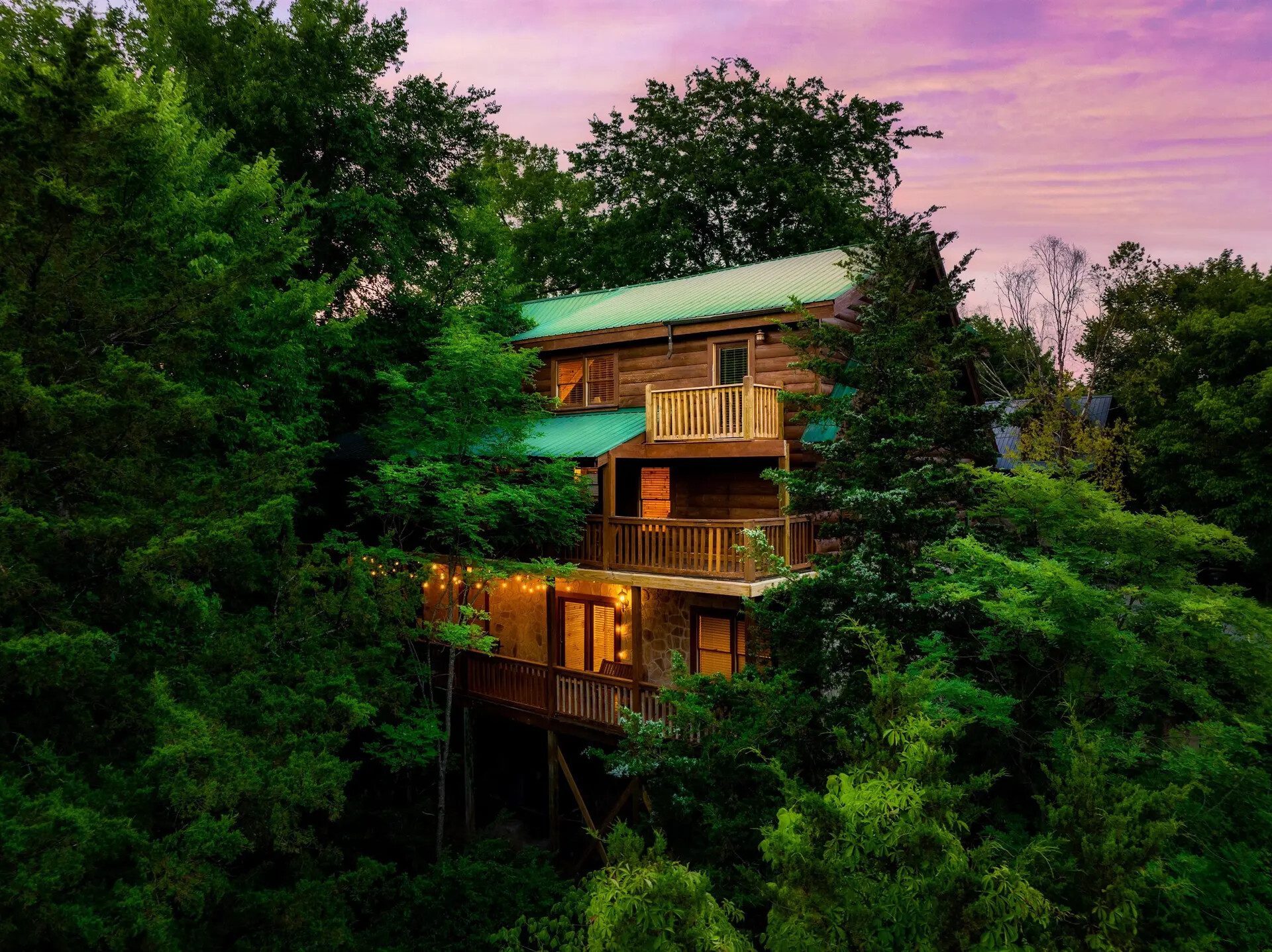
A Smoky Mountain cabin costs anywhere from $120 to $900+ per night in 2026, and the range is wide enough that the question is almost unanswerable without more context.
What you pay depends on four variables including cabin size, season, amenities and location, and understanding how each one moves the price is the difference between paying a fair rate and significantly overpaying.
This guide breaks down realistic pricing across every tier, explains the fees that most listings don’t surface upfront, and shows you exactly where the savings are.
The Honest Price Breakdown in 2026
| Cabin Type | Bedrooms | Sleeps | Off-Peak Nightly Rate | Peak Nightly Rate | Best For |
| Romantic/Couples | 1 BR | 2–4 | $120–$175 | $200–$300 | Couples, honeymoons |
| Standard Family | 2–3 BR | 6–10 | $175–$280 | $300–$450 | Families, small groups |
| Large Family / Group | 4–5 BR | 12–18 | $300–$500 | $450–$700 | Extended families, reunions |
| Luxury with Pool | 3–5 BR | 10–16 | $450–$650 | $600–$900+ | Groups wanting premium amenities |
| Mega-Lodge | 8+ BR | 30–60+ | $800–$1,500 | $1,500–$3,000+ | Large reunions, corporate groups |
Rates reflect general 2026 market conditions for the Gatlinburg / Pigeon Forge / Sevierville area. Actual pricing varies by property, platform, and exact dates.
Peak season in the Smoky Mountains is July (summer families) and mid-October through early November (fall foliage). Expect rates 30–60% higher than off-peak during these windows. Off-peak is broadly January through early March, excluding Valentine’s Day and Presidents’ Day weekends, and late April through early May.
The Four Factors That Actually Drive the Price
1. Cabin Size (This Matters Most)
The single biggest lever on price is how many bedrooms you’re renting. A 1-bedroom romantic cabin and a 5-bedroom group property at the same resort, in the same week, can differ by $400–$600 per night. That’s not a quality difference, it’s just square footage and bed count.
What this means practically is that if your group is large enough to justify a bigger cabin, the per-person math often gets better as you scale up. A 4-bedroom cabin at $400/night hosting 10 guests comes out to $40 per person per night. Compare that to booking four separate hotel rooms at $150 each. You’d pay $600 total, $200 more, and have no shared common space, no full kitchen, and no private hot tub. The cabin wins on value at that group size, which is why vacation rentals dominate the Gatlinburg lodging market.
2. Season (The Most Controllable Variable)
The Smoky Mountains have four distinct pricing periods:
- High season (July, October–early November, Christmas–New Year’s): Rates are at their highest. A cabin that costs $200/night in January may run $350–$450 in mid-October. Fall foliage weekends, specifically the third and fourth weekends of October, are the peak of the peak.
- Shoulder season (June, September, November post-foliage, early December): Rates are moderate. You get most of the experience at meaningfully lower cost. September is the hidden gem window with dry weather, early high-elevation foliage, and 20–30% lower rates than October.
- Low season (January–early March, late April–early May): Lowest rates of the year. January and February consistently offer the deepest discounts with some properties running 40–50% off peak rates, and mid-week stays during this window can be remarkably affordable.
- Weekday vs. weekend (year-round): This is an underused lever. Sunday through Thursday nights typically run 15–25% less than Friday and Saturday nights at the same property. If you can arrive Sunday and depart Thursday, you capture that savings without sacrificing much of the experience.
3. Amenities (The Price Multipliers)
Not all amenities cost the same to add to your rate. Here’s a rough hierarchy of what moves the price:
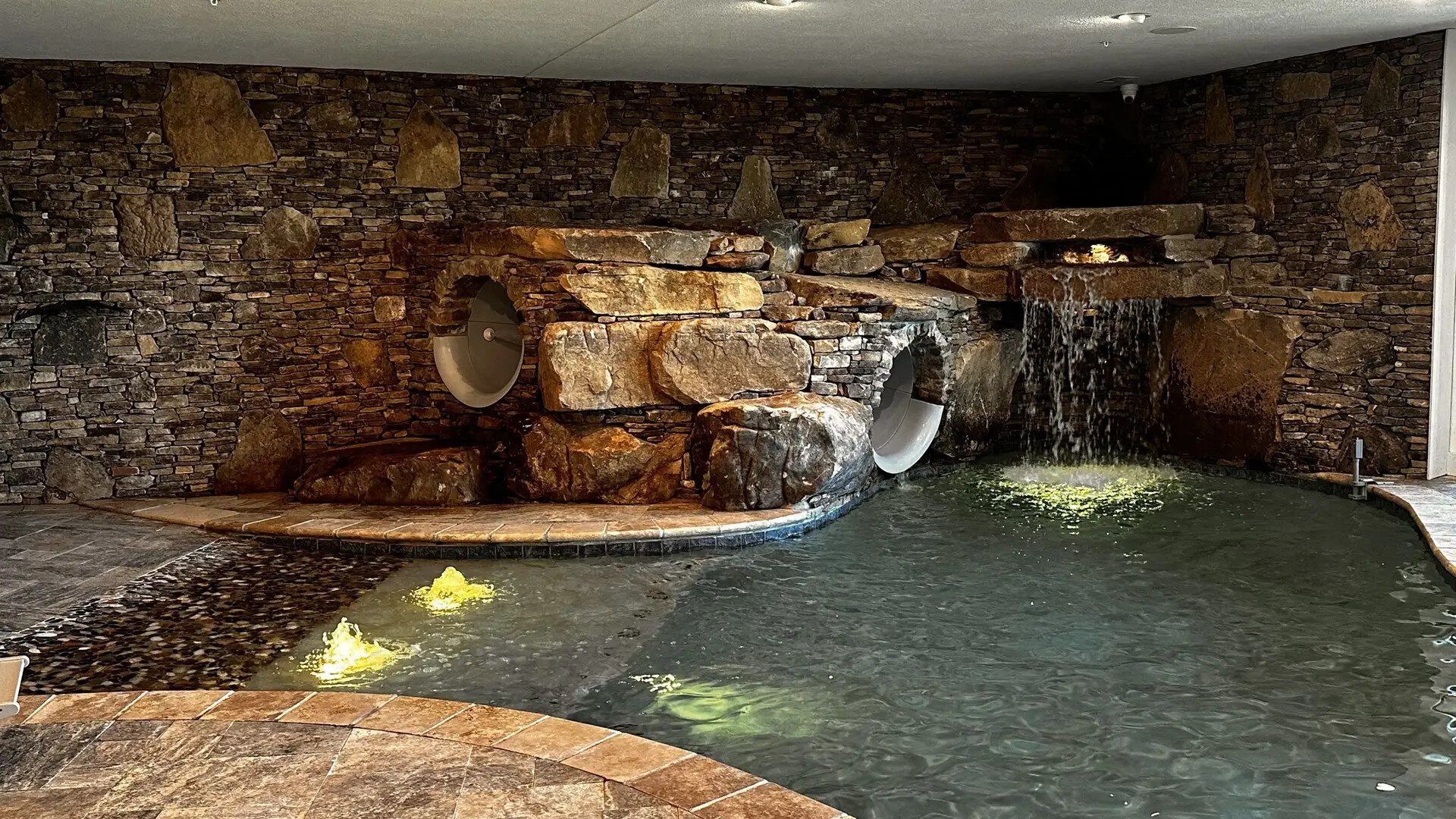
- Private indoor pool: The biggest single amenity premium adds $100–$300/night over comparable properties without one, sometimes more
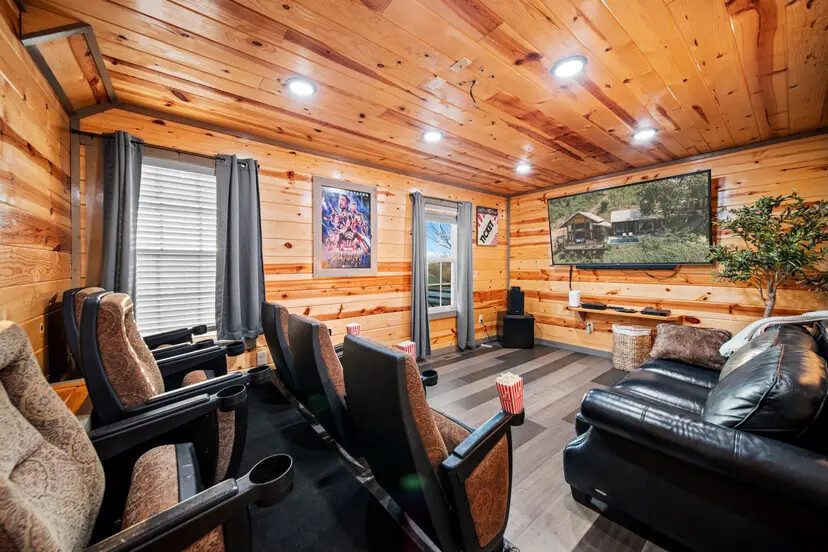
- Home theater room: Often adds $50–$100/night at the luxury tier
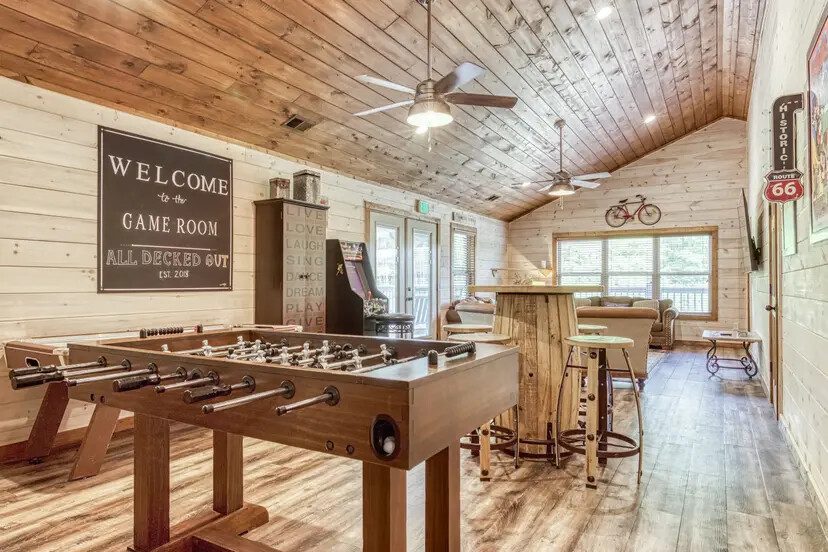
- Game room (pool table, arcade): Standard in mid-tier and above; adds $25–$75/night over basic cabins
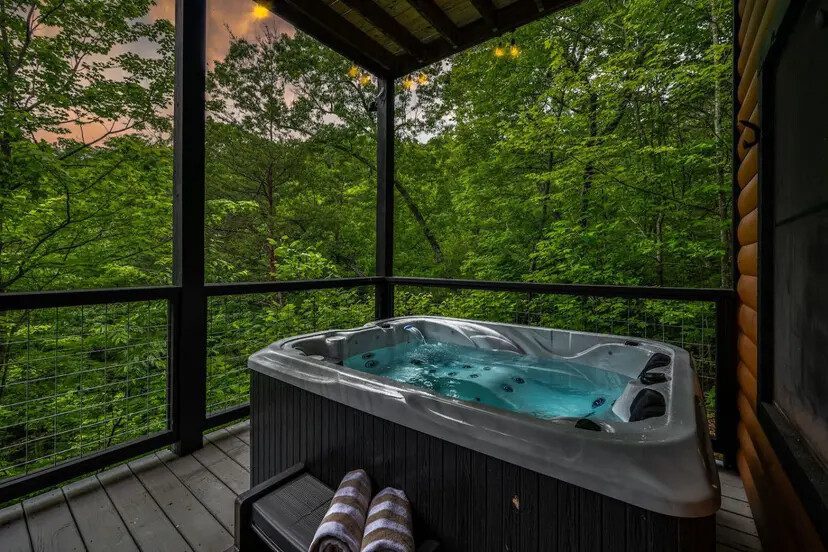
- Hot tub: Nearly universal in the Smoky Mountain cabin market—expect this as a baseline, not a premium, in most properties
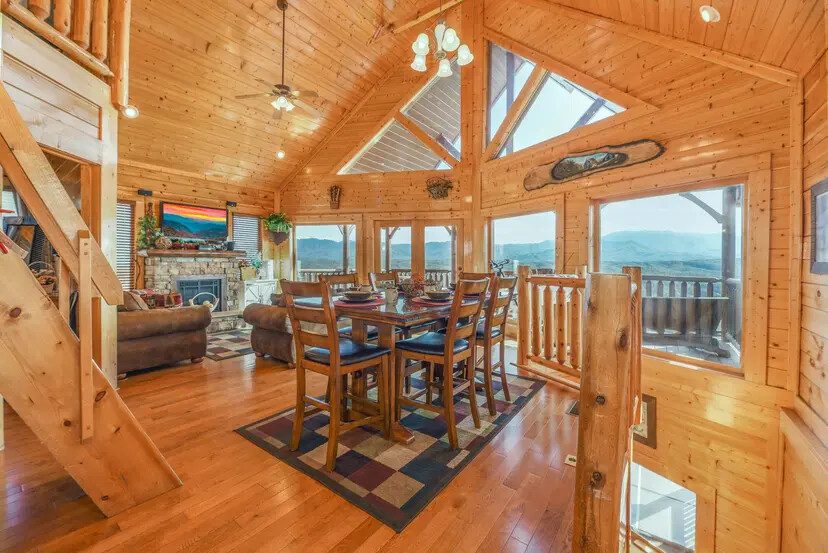
- Mountain views: A property on a ridge with panoramic views vs. one tucked into a wooded hollow will differ by $30–$75/night even at the same size
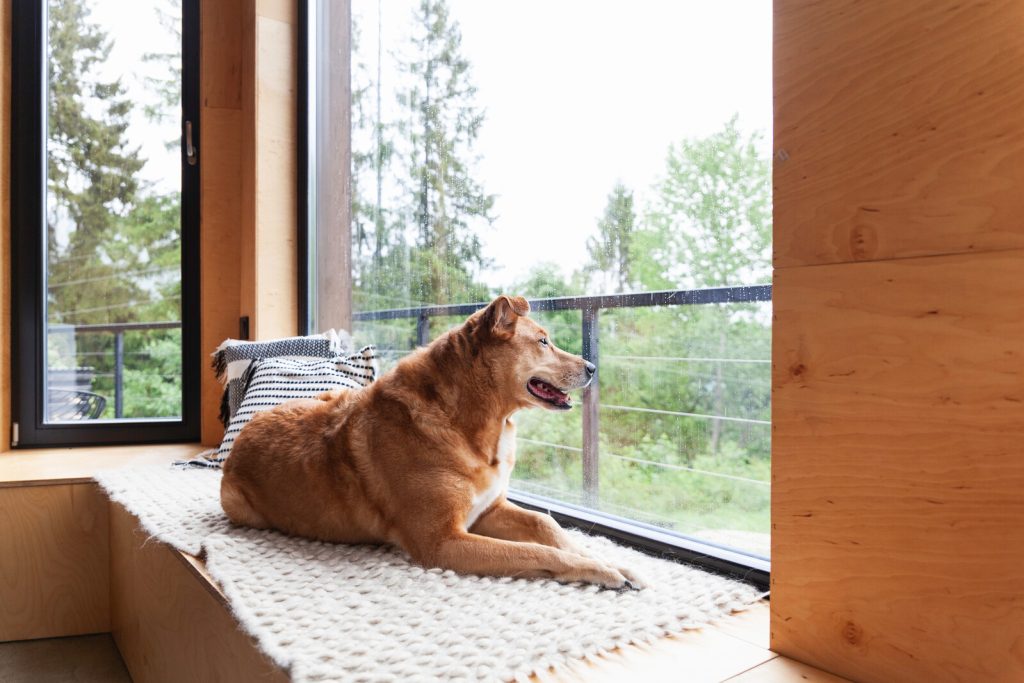
- Pet-friendly: Often adds a flat pet fee ($25–$75 per stay or per night) rather than changing the base rate, but confirm this separately before booking
The honest observation: Many guests pay for amenities they don’t use. If your group isn’t going to use a home theater, a pool table, or an indoor pool, you’re better off finding a simpler property at a lower nightly rate and spending the difference on food and activities.
4. Location (Gatlinburg vs. Pigeon Forge vs. Sevierville vs. Wears Valley)
All four areas are in the Smoky Mountain region, but pricing differs and what you’re paying for differs.
- Gatlinburg tends to carry a small premium because of its direct proximity to Great Smoky Mountains National Park and walkable downtown. Cabin prices run roughly 5–15% higher than comparable properties in Pigeon Forge for the same bedroom count and amenity set.
- Pigeon Forge has the largest cabin inventory in the region and often the most competitive pricing on large-group properties. If your priority is Dollywood, dinner shows, or The Island, and you’re less focused on national park access, Pigeon Forge cabins typically offer more square footage per dollar.
- Sevierville tends to be the most affordable of the three main towns. You’re further from both downtown Gatlinburg and the park entrance, but the pricing difference, especially on large properties, can be $50–$100/night.
- Wears Valley is quieter, further from the Parkway crowds, and has a separate national park entrance through Townsend. Properties here are often priced comparably to Sevierville and appeal to visitors who want solitude over proximity to attractions.
For a deeper breakdown of how these towns compare as bases, our guide on whether to stay in Sevierville, Pigeon Forge, or Gatlinburg covers the trade-offs in detail.
The Fees Nobody Talks About Until You’re at Checkout
This is where a lot of first-time Smoky Mountain cabin renters get caught off guard. The advertised nightly rate is rarely what you actually pay. Here’s what gets added:
Cleaning Fees
This is almost universal in the cabin rental market. For a 1–2 bedroom cabin, cleaning fees typically run $75–$150 per stay. For a 4–5 bedroom property, $150–$300 is common. For large group lodges, cleaning can run $400–$600 or more. This fee doesn’t scale proportionally with nights stayed, rather it’s a flat per-stay charge which means short stays absorb it harder than week-long stays. A $150 cleaning fee on a 2-night stay adds $75/night to your effective rate. On a 7-night stay, it adds about $21/night.
Tip: When comparing properties, always look at the total checkout cost for your actual stay length, not just the headline nightly rate. A cabin advertising $180/night with a $200 cleaning fee is more expensive for a 2-night stay than a cabin at $210/night with a $100 cleaning fee.
Tennessee Hotel/Occupancy Tax
Tennessee charges a hotel occupancy tax on short-term rentals. In Sevier County, which covers Gatlinburg, Pigeon Forge and Sevierville, the combined state and local tax rate is approximately 13.75%. On a $325/night cabin for 3 nights ($975 base), that adds roughly $134 in taxes. This is non-negotiable and applies regardless of which platform you book through.
Hot Tub Maintenance Fee
Some rental companies, particularly larger property management firms, charge a separate hot tub maintenance fee of $15–$40/night or $30–$75/stay. This covers chemical servicing and cleaning between guests. It’s not universal, but it shows up often enough to check for before assuming your hot tub is included in the base rate.
Pet Fees
Pet-friendly cabins almost universally charge extra. Expect $25–$75 per pet per stay, sometimes structured as per-night charges. Some properties have weight limits or breed restrictions. Always confirm pet policy in writing before booking if you’re traveling with animals because policies vary widely and a miscommunication here can be genuinely problematic at check-in.
Booking & Service Fees
Third-party platforms add their own service fees, typically 10–15% of the reservation total, on top of the cabin owner or management company’s rates. Booking directly with a local property manager or through a platform that connects you with professional hosts without the layered fee structure often produces a meaningfully lower total. This is a real savings mechanism, not a minor one.
Damage Protection & Security Deposit
Some properties require a refundable security deposit ($100–$500, returned after checkout) or charge a non-refundable damage protection fee ($30–$75/stay). Confirm which applies before booking.
What Your Total Stay Actually Costs: A Real Example
Let’s run through a concrete example. A family of 6 booking a 3-bedroom cabin in Gatlinburg for 4 nights in mid-October (peak foliage season):
| Line Item | Cost |
| Base nightly rate ($375/night × 4 nights) | $1,500 |
| Cleaning fee | $175 |
| Hot tub maintenance fee | $60 |
| Tennessee hotel tax (~13.75%) | $238 |
| Platform service fee (~12%) | $210 |
| Total | $2,183 |
Effective nightly rate: $546 — nearly 50% above the advertised $375/night.
Now the same booking on a different platform that connects you directly with the property manager, without a platform service fee:
| Line Item | Cost |
| Base nightly rate ($375/night × 4 nights) | $1,500 |
| Cleaning fee | $175 |
| Hot tub maintenance fee | $60 |
| Tennessee hotel tax (~13.75%) | $238 |
| Total | $1,973 |
That’s a $210 difference purely from removing the platform service fee, and the cabin is identical.
How to Avoid Overpaying: Five Practical Strategies
1. Always compare total checkout cost, not nightly rate. Two cabins at the same headline rate can differ by $200–$400 for a 3-night stay once fees are applied. Most booking platforms let you see the full cost before committing. Use it!
2. Shift your dates to weekdays. Sunday through Thursday nights at the same property typically run 15–25% less than Friday and Saturday. If you can arrive on Sunday and depart Thursday, you keep the experience but trim the price meaningfully.
3. Visit in shoulder season. September and early November are the highest-value windows in the Smoky Mountains. You get a real fall atmosphere, comfortable temperatures, and rates 20–40% below October peak. Late April to early May is similarly underpriced for the experience you get.
4. Book longer to dilute fixed fees. A 4-night stay spreads the cleaning fee and any flat charges across more nights, lowering your effective per-night rate. A 7-night stay in a cabin is almost always a better per-night value than two 3-night stays in the same property.
5. Book directly when possible. Going through a local property manager or a platform that facilitates direct booking removes the 10-15% third-party service fee that large platforms layer on top. That fee is real money. On a $1,500 base reservation, it’s $150–$225 in additional cost for no additional value to you as a guest.
Our Gatlinburg vacation rentals connect you directly with professional property managers in the area with no hidden platform markup layered on top of what the host is actually charging.
The Per-Person Math: When Cabins Beat Hotels
The comparison that most people don’t run is the per-person cost comparison between a cabin and hotel rooms for the same group.
Group of 8, 3 nights in October:
| Option | Total Cost | Per-Person Cost |
| 4 hotel rooms at $180/night × 3 nights | $2,160 + tax | ~$270/person |
| 3-bedroom cabin at $350/night × 3 nights + fees | ~$1,400 total | ~$175/person |
The cabin wins by roughly $95/person even after fees, and the group has a full kitchen which further cuts food costs, a hot tub, a private deck, and actual shared common space. The hotel rooms have none of that.
This math gets more compelling as group size grows. It’s the core reason cabin rentals have essentially displaced hotels as the default accommodation in the Smoky Mountains for anyone traveling with more than 4 people.
Booking Timing: How Far Ahead You Need to Be
| Travel Window | Recommended Booking Lead Time |
| October peak foliage (Oct 10–25) | 6–12 months in advance |
| July 4th week and summer weekends | 4–6 months in advance |
| Christmas/New Year’s week | 6–9 months in advance |
| September (shoulder) | 2–3 months in advance |
| Early November (shoulder) | 6–8 weeks in advance |
| January–March (low season) | 2–4 weeks is often sufficient |
| Last-minute (under 2 weeks) | Check for cancellations; mid-week only |
| Travel Window | Recommended Booking Lead Time |
| October peak foliage (Oct 10–25) | 6–12 months in advance |
| July 4th week and summer weekends | 4–6 months in advance |
| Christmas/New Year’s week | 6–9 months in advance |
| September (shoulder) | 2–3 months in advance |
| Early November (shoulder) | 6–8 weeks in advance |
| January–March (low season) | 2–4 weeks is often sufficient |
| Last-minute (under 2 weeks) | Check for cancellations; mid-week only |
The hardest window to find quality inventory is peak October. The best properties, those with genuine mountain views, well-maintained hot tubs and proximity to both the park and downtown Gatlinburg, book out for prime October weekends by spring of the same year. If you’re planning a fall foliage trip, start looking now.
For a deeper look at when to visit to balance experience and cost, our guide to the best cabins in the Smoky Mountains covers property types and what different cabin areas offer.
FAQs: How Much Does a Smoky Mountain Cabin Cost?
How much does a 1-bedroom cabin in Gatlinburg cost per night?
In 2026, a 1-bedroom Smoky Mountain cabin typically runs $120–$175/night in off-peak season (January through early March, late April) and $200–$300/night during peak periods like July and October. Add cleaning fees ($75–$150/stay) and Tennessee’s hotel tax (approximately 13.75%) to get your true total. The cheapest rates are consistently found in January and February.
What is the average cost of a Smoky Mountain cabin rental?
The market-wide average nightly rate for a Gatlinburg cabin is around $229/night for a base room, but this number is nearly meaningless without knowing size, amenities, and season. A realistic budget for a 3-bedroom family cabin in October, the most popular booking window, is $350–$500/night base rate, plus $150–$200 in fees and taxes, for an effective total of $500–$700/night.
Are Smoky Mountain cabins cheaper in winter?
Yes, significantly. January and February are the lowest-priced months in the Gatlinburg cabin market, with some properties running 40–50% below their October peak rates. A cabin that costs $350/night during fall foliage may be available for $175–$225/night in late January. The trade-off is cold temperatures and potential road closures at higher elevations, but the park itself remains open and the waterfall hikes are accessible.
What fees should I expect on top of the nightly rate for a Smoky Mountain cabin?
Budget for a cleaning fee ($75–$300+ depending on cabin size), Tennessee hotel/occupancy tax (~13.75% of the total), and potentially a hot tub maintenance fee ($15–$75/stay). If booking through a large third-party platform, a service fee of 10–15% is also added on top. These fees combined can add 30–50% to the advertised nightly rate on short stays. Always calculate the total checkout cost before committing.
Is it cheaper to rent a cabin in Pigeon Forge vs. Gatlinburg?
Generally, yes. Pigeon Forge has the largest cabin inventory in the Smoky Mountains and frequently offers comparable properties at 5–15% lower rates than Gatlinburg. Sevierville properties tend to be the most affordable overall, at the cost of being further from both the national park entrance and downtown Gatlinburg. If your priority is national park access and walkable attractions, Gatlinburg’s small premium is often worth it.
How much should I budget per person for a Smoky Mountain cabin trip?
For a group of 6 staying 4 nights in a 3-bedroom cabin during shoulder season (September or early November), expect to spend roughly $250–$320 per person for lodging including all fees compared to $350–$450+ per person if booking equivalent hotel rooms for the same group. The per-person cabin advantage grows with group size. A group of 10 in a 4-bedroom cabin during off-peak season can come in well under $150/person per night all-in.
What is the cheapest day of the week to rent a Gatlinburg cabin?
Wednesday is consistently the lowest-priced weeknight in the Gatlinburg cabin market, based on booking data. Sunday through Thursday nights are broadly 15–25% cheaper than Friday and Saturday nights. If you have flexibility, arriving Sunday evening and departing Thursday morning gives you 4 nights at weekday rates and avoids the peak weekend traffic on both ends.
How far in advance do I need to book a Smoky Mountain cabin?
For peak October foliage weekends and the Christmas/New Year’s week, 6–9 months ahead is not excessive for the best properties. Quality cabins with genuine mountain views and well-maintained amenities sell out for these windows long before the season arrives. For shoulder season (September, early November, late April), 2–3 months is usually sufficient. Low season (January–March) bookings can often be made 2–4 weeks out and still find good selection.
Find your next escape in the Smoky Mountains.