
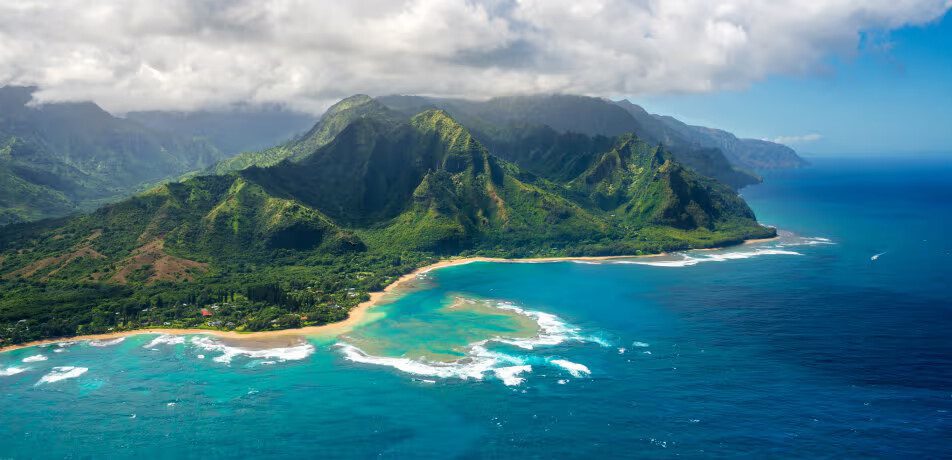
The Maui vs. Oahu question is the first one most Hawaii travelers have to answer, and it’s genuinely not a simple one.
Both islands boast warm water, volcanic landscapes, and excellent food, but they feel nothing alike on the ground. Oahu is dense, urban, and historically rich, with Honolulu’s skyline pressing right up against the beach and more to do per square mile than any other island. Maui is slower, more spread out, and tilts toward the natural and the resort. It’s the kind of place where a week can disappear between a beach, a volcano, and a legendary coastal drive. Choosing wrong doesn’t ruin a trip, but choosing right makes a real difference.
This guide breaks down the comparison category by category including beaches, cost, nightlife, outdoor access, crowds, and who each island actually suits so you can match your trip to the island rather than guessing.
One important note for 2026 Maui visitors is that West Maui, including Lahaina, continues its recovery following the devastating August 2023 wildfires. Kaʻanapali, Kapalua, Napili, Wailea, Kīhei, and the Road to Hāna are all fully open and welcoming visitors. Tourism is a direct economic lifeline for residents still rebuilding their lives. The rest of this article reflects current conditions.
Jump to Compare:
Head-to-Head Comparison: Maui vs Oahu
| Category | Maui | Oahu |
| Atmosphere | Resort-forward, laid-back, nature-focused | Urban-coastal, busy, historically rich |
| Cost | Higher avg. vacation rental $250–$500+/night | More range with avg. $150–$350/night in most areas |
| Nightlife | Limited — live music, sunset bars, Kīhei pub scene | Strong — Waikīkī bars, clubs, rooftop lounges |
| Outdoor access | Haleakalā, Road to Hāna, Molokini, diverse beaches | Diamond Head, North Shore, Hanauma Bay, windward coast |
| Crowds | Fewer visitors overall (~2.7–2.9M/year) | Hawaii’s most visited island (~5.5–6M/year) |
| Avg. vacation rental cost | $250–$500/night (higher in Wailea/Kapalua) | $150–$350/night (varies by neighborhood) |
| Best for | Couples, honeymooners, beach+adventure mix | First-timers, families, budget-conscious, city lovers |
| Car required? | Yes, absolutely essential | Optional in Waikīkī; TheBus covers the island |
| Island size | 727 sq miles | 597 sq miles |
| Visitors per year | ~2.7–2.9 million | ~5.5–6 million |
Atmosphere: Urban Energy vs. Resort Escape
Oahu is the only Hawaiian island that functions as a genuine city.
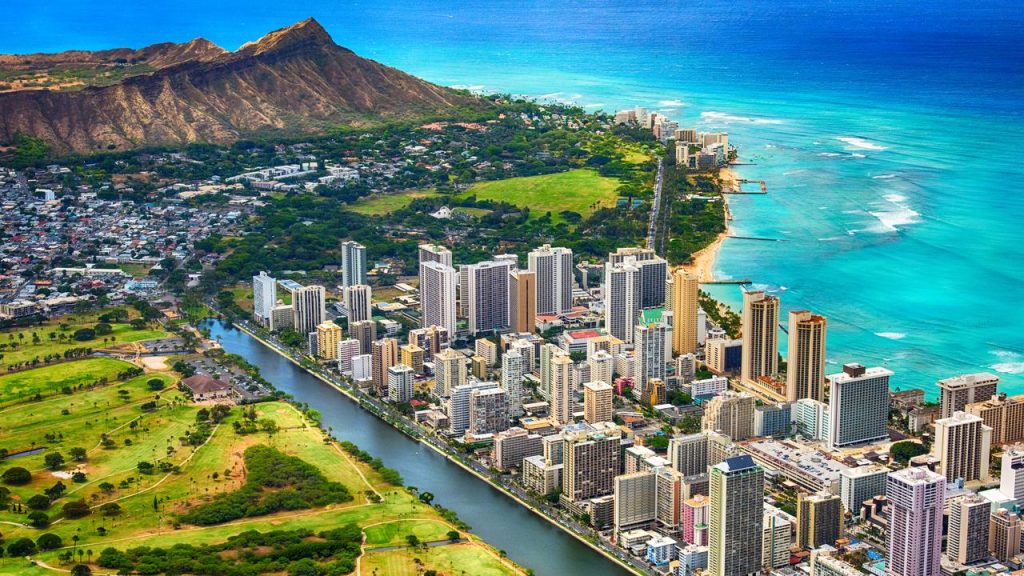
Honolulu has skyscrapers, a rail transit system under ongoing expansion, rush-hour traffic on the H-1 that rivals Los Angeles, and a downtown restaurant scene drawing national attention.
- Waikīkī, the main tourist strip, packs hotels, shops, surf schools, and beach bars into a narrow stretch of sand facing Diamond Head.
- It’s entertaining and convenient, and it feels nothing like what most people picture when they imagine Hawaii. Head away from Waikīkī to the North Shore towns of Haleʻiwa and Sunset Beach, or to the windward coast communities of Kailua and Lānaʻi (the town, not the island), and the vibe shifts completely to small-town coastal Hawaii.
Maui has no city.
The largest towns, Kīhei, Wailuku and Kahului, are genuine communities rather than resort constructs, and the resort corridors at Kaʻanapali and Wailea operate as self-contained enclaves of poolside luxury largely separate from local life.
- Between them lies a huge swath of island that is agricultural, upcountry, windswept, and relatively wild.
- The surf town of Pāʻia on the north shore and the cowboy-flavored upcountry town of Makawao feel a world away from the beachfront resorts an hour’s drive south.
Trade-off: Oahu’s urban energy means more options and better logistics, but it also means you’re never far from traffic, noise, or crowds. Maui’s quiet requires a car and some planning to access.
Cost: A Real Gap Across Every Category
This is where the Maui vs. Oahu comparison gets practical.
- Oahu is consistently 20–30% cheaper across most spending categories.
- A plate lunch at a local counter in Honolulu runs $12–$16. The same meal on Maui costs closer to $15–$20.
- Mid-range vacation rentals in solid Oahu neighborhoods like Kailua, Kāhala and areas around Waikīkī run roughly $150–$250 per night. Equivalent properties in Wailea or Kapalua on Maui easily run $300–$500.
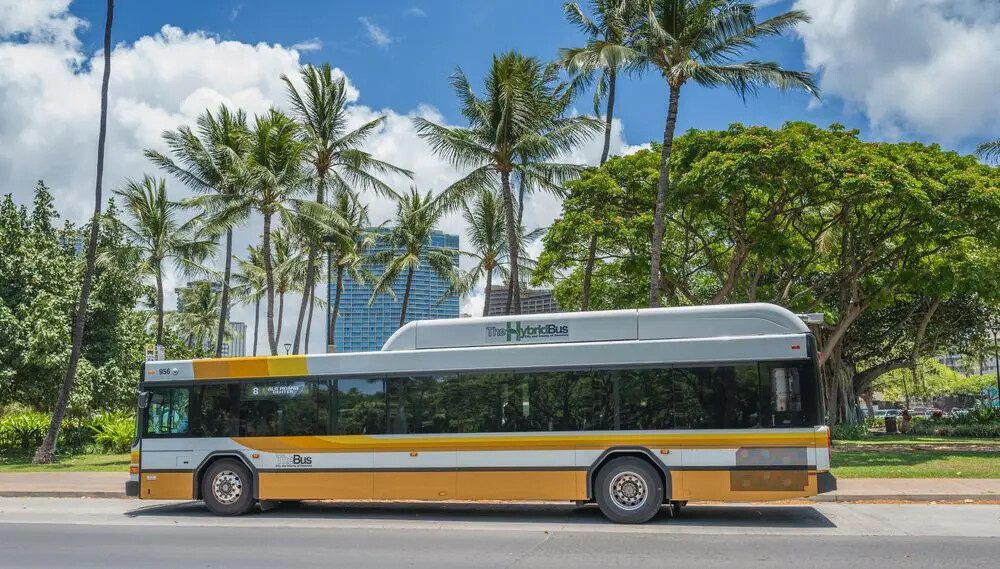
Oahu also has TheBus, a public transit system that covers the island for $7.50 a day.
For budget travelers staying in Waikīkī, it’s genuinely possible to explore the island and see Pearl Harbor, the North Shore, Diamond Head and Hanauma Bay without a rental car. On Maui, a car is non-negotiable. Haleakalā is only accessible by car, and The Road to Hāna requires a car. Molokini snorkel tours depart from Māʻalaea Harbor, which requires a car to reach from most accommodations. Budget roughly $350–$665 per week for a Maui rental car, on top of higher base accommodation costs.
For groups traveling together like families or friend groups splitting a vacation rental, both islands get more manageable on cost. A five-bedroom house with a private pool near Kailua on Oahu or in Kīhei on Maui, split across eight people, often comes out cheaper per person than two hotel rooms. That’s where vacation rental math starts working in your favor on either island.
Tip: Maui is not a budget destination in 2026. The outer islands generally see higher accommodation costs than Oahu, and Maui’s popularity at the top end of the market means truly affordable options fill fast. Book early.
Beaches: Different Strengths, Both Excellent
This category is closer than most comparisons suggest.
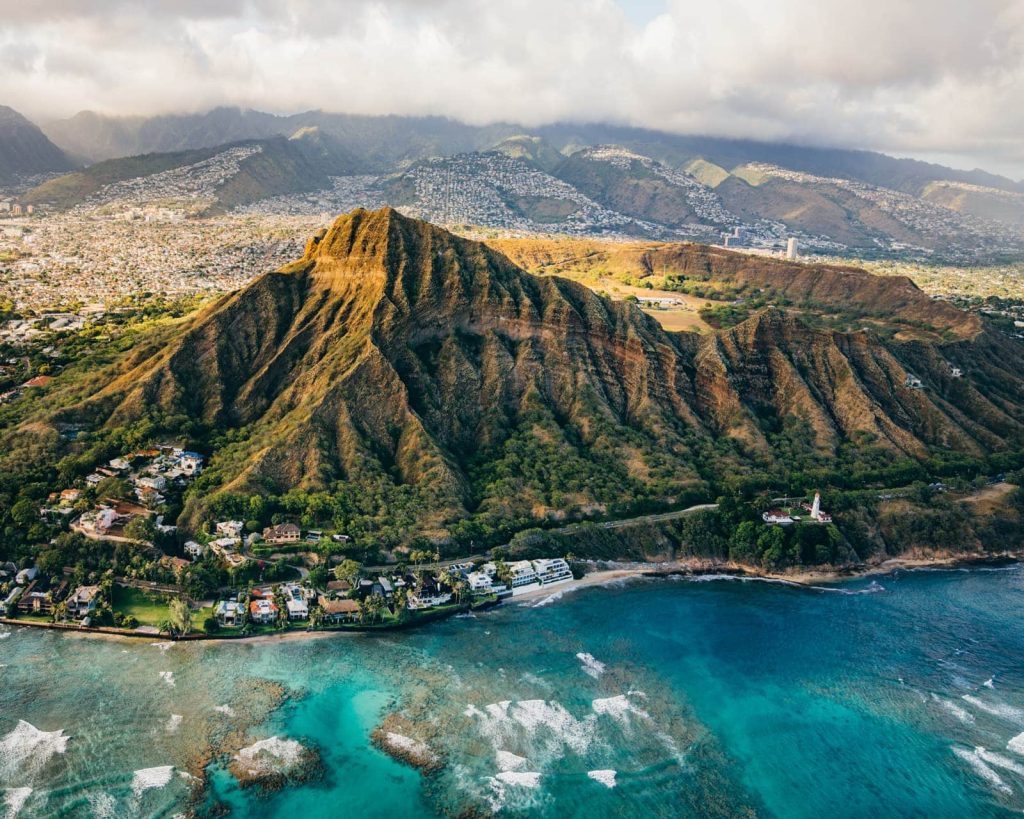
Oahu’s beaches are famous for a reason. Waikīkī is the most recognizable stretch, broad and calm in summer, backed by the iconic profile of Diamond Head.
- Lānaʻi Beach in Kailua is consistently ranked among the top beaches in the United States for its turquoise water and relatively uncrowded feel.
- Sandy’s Beach on the southeastern coast is a serious bodysurfing and shorebreak spot — it’s locals-heavy and not for casual swimmers.
- The North Shore, from Haleʻiwa to Sunset Beach and Pipeline (Banzai Pipeline, off Ehukai Beach Park), shifts from a summer swimming beach to a winter spectator venue for waves that hit 40 feet and above.
- Hanauma Bay, inside a volcanic crater, is one of the best protected snorkeling spots in Hawaii, but you need to book timed-entry reservations in advance through the online system, and the crowds are real.
Maui’s beaches are more diverse in their character.
- Kaʻanapali is the resort beach with miles of golden sand, calm water for swimming and snorkeling at Black Rock (Puʻu Kekaʻa), and resort infrastructure within walking distance.
- Wailea Beach is calmer and consistently clear, flanked by luxury resorts.
- Napili Bay just north of Kapalua is a crescent-shaped gem ideal for families because it’s calm, small and easy.
- Makena Beach (Big Beach) is the island’s most dramatic stretch of sand, remote-feeling and wide, though the shorebreak can be powerful.
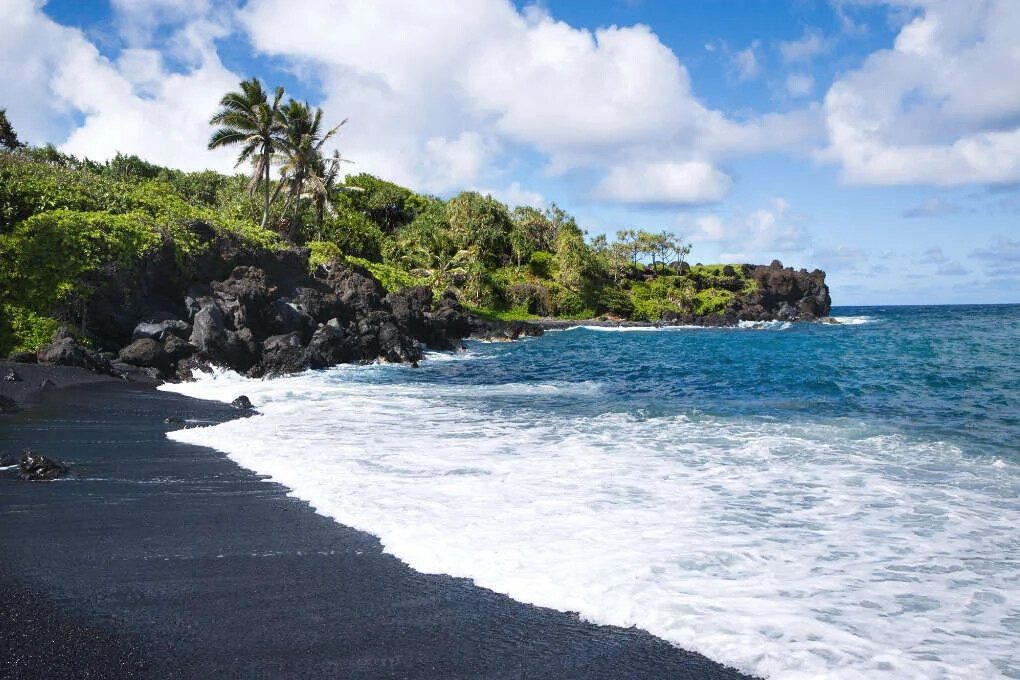
- Waiʻānapanapa State Park on the Road to Hāna gives you a black sand beach inside a volcanic landscape. It’s visually striking, not a swimming beach, and requires advance reservations.
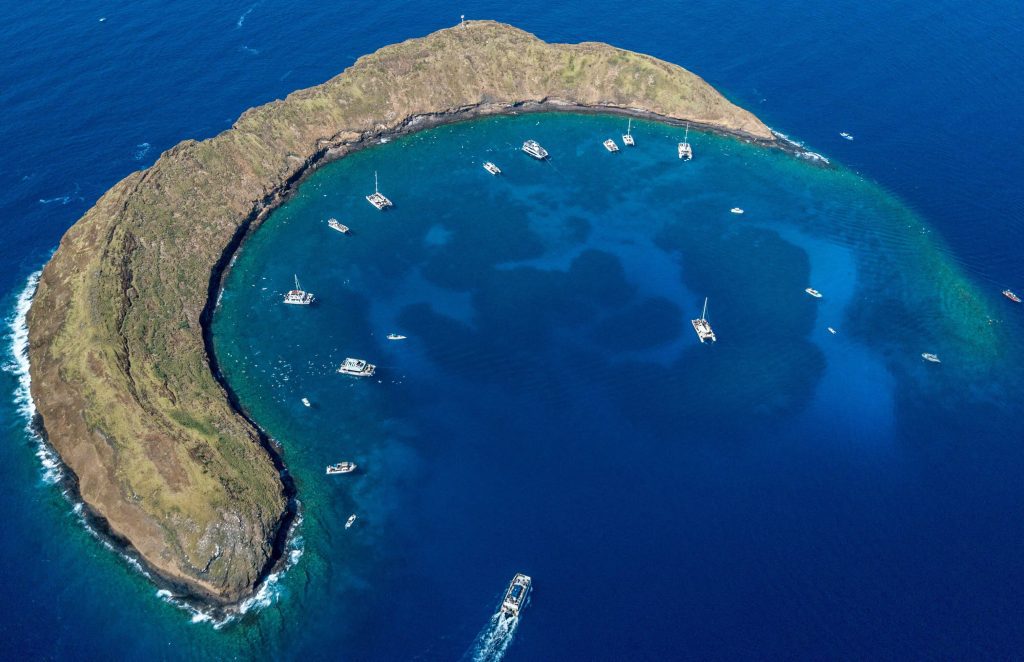
Off Maui’s south coast, Molokini Crater, a partially submerged volcanic cone about three miles offshore, offers snorkeling visibility and reef quality that Oahu doesn’t match. More than 250 species of tropical fish have been recorded there.
Verdict: Maui edges ahead for beach diversity and water clarity. Oahu has more beaches within easy reach and better options for travelers without cars.
Outdoor Access: Both Volcanic, Both Excellent, Different Scale
Oahu’s outdoor flagship is Diamond Head State Monument, a 1.6-mile round-trip hike inside the rim of a volcanic crater that tops out at 761 feet with panoramic views of Waikīkī and the Pacific. It’s crowded, so book parking or go early, but it’s genuinely rewarding.
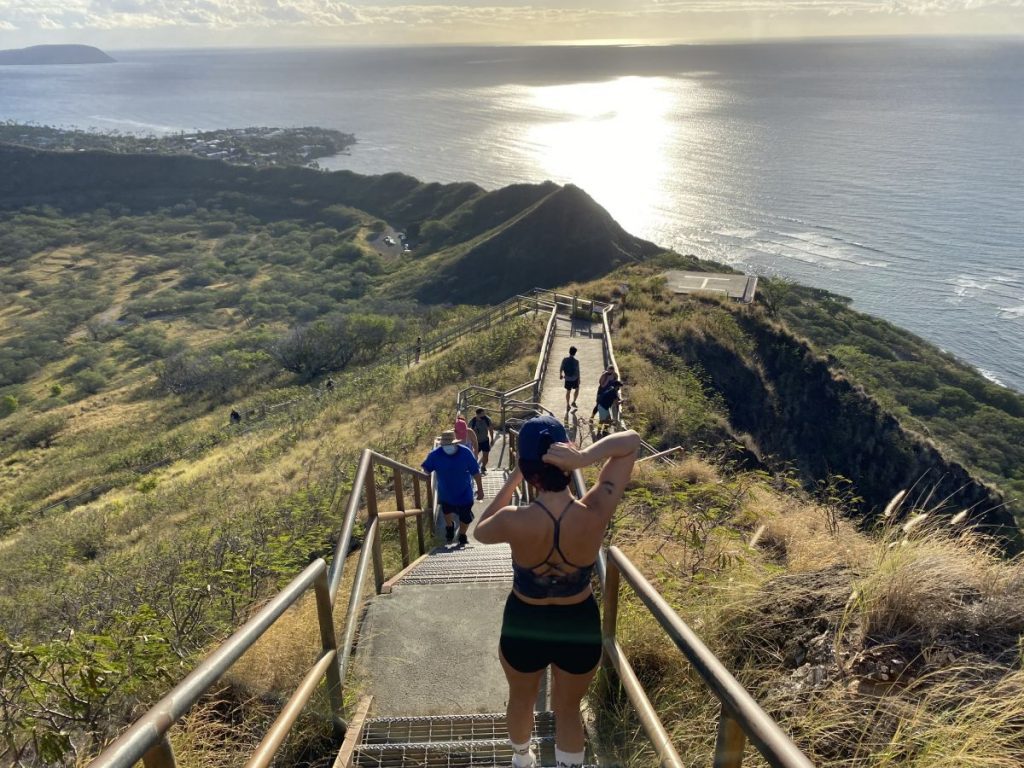
- The Makapuʻu Lighthouse Trail on the southeastern coast is a paved walk with humpback whale sightings in winter and dramatic coastline views.
- Mānoa Falls Trail, just minutes from Waikīkī, runs through a jungle valley to a 150-foot waterfall.
- Waimea Valley on the North Shore offers a guided botanical garden walk to another waterfall.
- Kualoa Ranch in the windward interior has been used as a filming location for Jurassic Park, Lost, and Hawaii Five-0. The horseback, ATV, and film-site tours are popular with families.
Maui’s outdoor scale is larger.
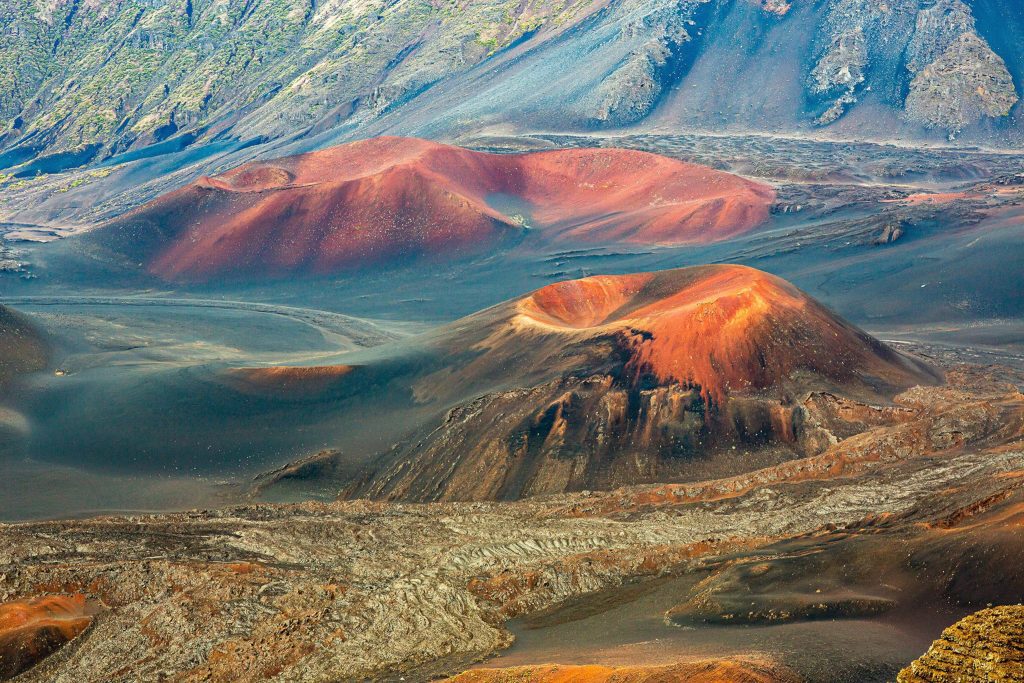
Haleakalā National Park rises to 10,023 feet, standing on the summit at sunrise, above the cloud layer, looking out over a crater-colored desert of red and brown cinder, is unlike anything else in the state.
The sunrise requires a $1 vehicle reservation through Recreation.gov, opening exactly 60 days in advance, and summer dates sell out fast.
- The Pīpīwai Trail inside the park’s Kīpahulu District, a 5-mile round trip through bamboo forests to the 400-foot Waimoku Falls, is one of the best hikes in all of Hawaii.
- The Road to Hāna covers 64 miles and 620 curves along the northern coast, threading through waterfalls, jungle, black sand beaches, and roadside fruit stands; stops like Aunty Sandy’s banana bread stand (near Keʻanae, usually sells out by early afternoon) and Coconut Glen’s dairy-free coconut ice cream (near mile marker 27) have become institutions.
- Hoʻokipa Beach Park near Pāʻia is a world center for windsurfing and kiteboarding. Watching from the bluff-top overlook is free.
Verdict: Maui for scale and variety of outdoor experiences. Oahu for accessibility and ease.
Nightlife: Not Really a Contest
If nightlife matters to your trip, choose Oahu. Waikīkī has bars at every price point, clubs that run past 2 a.m., rooftop lounges, sunset cruises, and the kind of general after-dark energy you’d expect from a major tourist and military city.

- The Study, tucked behind a bookshelf in the lobby of The Modern Honolulu hotel, does the speakeasy concept well with moody, live music most nights and good whiskey cocktails.
- Tiki’s Grill and Bar on Kalākaua Avenue has a full late-night menu and a solid bar program.
- The food hall scene and cocktail bars around Kakaʻako have matured into a genuine destination for locals and visitors alike.
Maui’s nightlife is quiet by mainland standards.
- Kīhei has a loose pub strip centered around the Kīhei Kalama Village — Three’s Bar and Grill, the Tiki Bar, Maui Brewing Company’s taproom in Kīhei with 36 craft and specialty beers on tap.
- Pāʻia has late-night coffee and some bar seating at Mama’s Fish House if you can get it.
- The Tikehau Lounge in the Wailea area draws cocktail enthusiasts. That’s roughly the full picture.
- Makawao has Colleen’s, a neighborhood gathering spot with a country vibe that is primarily for locals. There are no clubs in the Honolulu sense.
Tip: Maui nights tend to end early. If you’ve been hiking or driving the Road to Hāna all day, that’s often fine. If you specifically came to go out, Oahu is the answer.
Food: Both Punching Well Above Their Size
Oahu’s food scene reflects the island’s diversity with Japanese, Korean, Filipino, Hawaiian, Chinese, and modern Pacific influences coexisting in a city that takes food seriously. Plate lunch is the daily staple with two scoops of rice, macaroni salad, and a protein, available for $12–$16 at counters across the island. Here are a few restaurant recommendations:
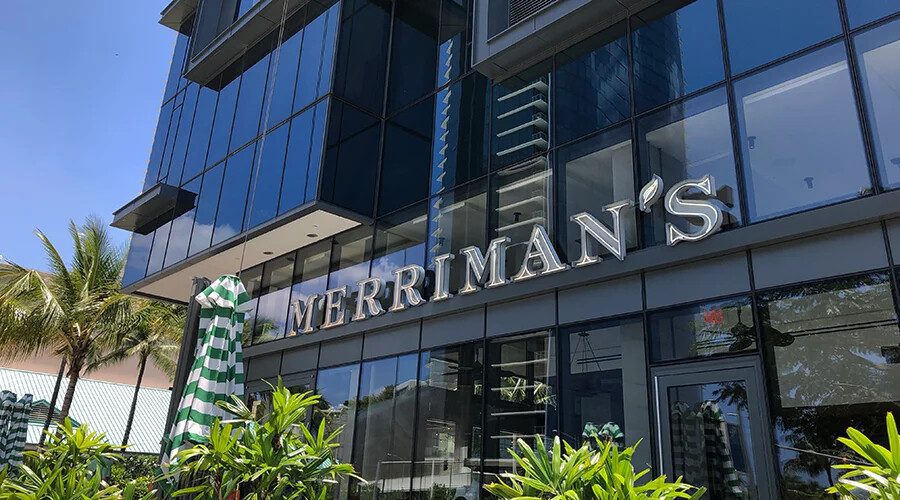
Merriman’s in Ward Village does farm-to-table with macadamia nut-crusted mahi mahi and sunset views from its perch at 1108 Auahi Street.
- The KCC Farmers Market at Kapi’olani Community College every Saturday morning is one of the best in the state.
- Giovanni’s shrimp truck on the North Shore (there are now multiple locations including the Kahuku original on Kamehameha Highway) still does its garlic shrimp in the same battered white truck it always has.
Maui’s food is strong particularly at its upper end. Here’s a few we’d check out:
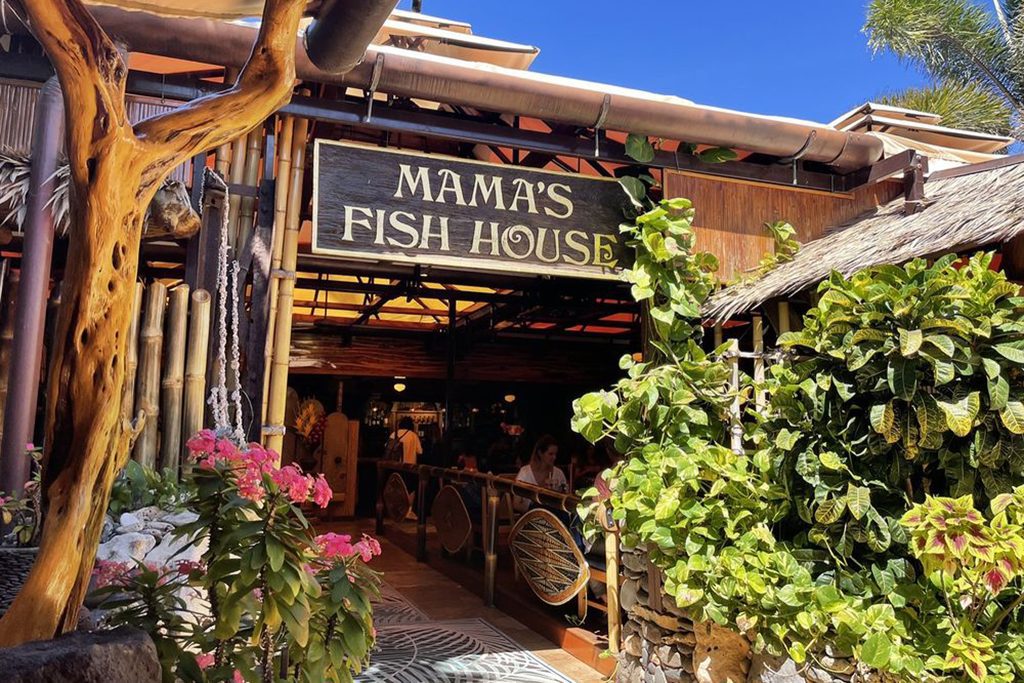
Mama’s Fish House in Pāʻia, family-owned since 1973 with a menu that names the fisherman and the catch point every day, is the most famous restaurant on the island; reservations need to be made weeks in advance.
- Pāʻia Fish Market, right in town, is the counter-service version with fish tacos and plates at a fraction of the price and no reservation needed.
- Maui Brewing Company’s Kīhei taproom is a genuine brewery with good food and live music.
- The Tin Roof in Kahului, from chef Sheldon Simeon of Top Chef fame, does mochiko chicken and poke bowls out of a small take-out spot. Upcountry dining in Kula and Makawao has genuine farm-to-table depth, with local farms supplying directly to restaurants like Marlow in Kula.
Crowds: The Real Difference
The numbers tell the story clearly.
- Oahu draws roughly 5.5–6 million visitors annually, with the majority concentrated in Waikīkī.
- Maui receives about 2.7–2.9 million.
But, raw visitor numbers slightly mislead the comparison.
Waikīkī is specifically crowded in a way that Maui’s resort corridors are not. Kaʻanapali and Wailea are large, spread out, and resort-segregated enough that they rarely feel as compressed as a summer Sunday at Waikīkī. On the other hand, Maui’s popular natural sites like the Road to Hāna and Haleakalā summit have their own crowds, particularly at sunrise and during summer, that require advance reservations and early starts.
The windward coast and North Shore of Oahu offer a real escape from Waikīkī’s density if you’re willing to drive or bus 30–45 minutes. Kailua, in particular, feels like a different island from Waikīkī because it’s a genuine town with good coffee, excellent beaches, and a pace that has nothing to do with the tourist corridor.
Tip: Neither island is a quiet getaway in peak season. July and August on both Maui and Oahu are genuinely crowded. September and October are the answer for travelers who want shoulder-season quiet.
Can You Visit Both?
Yes, and it’s worth doing if you have ten or more days. The inter-island flight between Honolulu (HNL) and Kahului (OGG) takes about 35–40 minutes and typically costs $80–$150 each way on Hawaiian Airlines or Southwest. The most common pattern is to split a two-week trip roughly 5–6 nights on each island. A shorter approach is to fly into Honolulu, spend three nights, then fly to Maui for four nights. That gives you Pearl Harbor and Hanauma Bay on Oahu before shifting to the Road to Hāna and Haleakalā on Maui.
Logistics Tip: Vacation rentals on both islands tend to have minimum stay requirements typically of three to five nights, and the full-kitchen and private-space setup pays off more the longer you stay. Doing two separate five-night vacation rental stays across both islands is practical and often better value than a week-split hotel arrangement.
Choose Maui If…
- You want the classic “Hawaii vacation” picture with luxury resort beaches, whale watching in winter, a dramatic volcanic sunrise, and a legendary coastal road trip
- Romance, honeymoon, or anniversary is the purpose as it’s quieter and more secluded
- You’re prepared to rent a car for your entire stay
- Your budget is flexible. Maui runs higher across accommodation, food, and activities
- You want the best beach diversity in the state, including Molokini snorkeling
- Lahaina and West Maui are on your list. The area is recovering and welcoming visitors, and your spending directly supports local businesses still rebuilding
Choose Oahu If…
- It’s your first Hawaii trip and you want the widest range of experiences in one place
- History matters. Pearl Harbor, the USS Arizona Memorial, the Bishop Museum, ʻIolani Palace (the only royal palace on US soil)
- You’re traveling with kids as there’s more variety, easier logistics, and TheBus eliminates car rental stress
- Budget is a real factor. Oahu is 20–30% cheaper on average across accommodation and food
- You want genuine nightlife and a restaurant scene with depth and variety
- You want the option to skip the rental car, at least for part of your stay
Frequently Asked Questions
Is Maui or Oahu better for a first trip to Hawaii?
Oahu is generally better for first-timers because it offers a broader mix of experiences with beaches, history, cultural sites, diverse food, and easier logistics in one place. Maui is an excellent first choice if beaches, nature, and a slower pace are your specific priorities, but it requires a rental car for the entire stay and runs higher on cost.
Is Maui more expensive than Oahu?
Yes, generally. Mid-range vacation rentals on Maui in areas like Wailea and Kapalua typically run $300–$500 per night, compared to $150–$350 for equivalent properties on Oahu.
Food and activities also tend to cost more on Maui. Oahu’s major cost advantage is TheBus, a public transit system covering the island for $7.50 per day, which can eliminate the need for a rental car entirely if you’re staying in Waikīkī.
Which island is less crowded, Maui or Oahu?
Maui receives roughly 2.7–2.9 million visitors annually compared to Oahu’s 5.5–6 million, so it’s less visited overall. However, Maui’s popular attractions like the Haleakalā sunrise, the Road to Hāna and Molokini snorkel tours, require advance reservations and early starts during peak season. Both islands are genuinely crowded in July and August.
What is the best island for whale watching, Maui or Oahu?
Maui is significantly better for whale watching. The Auau Channel between Maui, Lānaʻi, and Molokaʻi concentrates humpback whales during the December–April season, and boat tours departing from Māʻalaea Harbor put you in the middle of peak whale density. Shore viewing from spots like McGregor Point on Maui’s south coast is also productive. Oahu has whale watching tours, but the sighting rates and encounter quality are lower.
Do I need a car on Maui? What about Oahu?
On Maui, yes, a car is essential. Haleakalā, the Road to Hāna, Molokini departure points, and most beaches are not accessible without one. Budget $350–$665 per week for a rental car. On Oahu, TheBus covers the island for $7.50/day, making it possible to see most major attractions without a car if you’re staying in Waikīkī. A one or two day rental for North Shore and windward coast days is a practical middle ground.
Which island has better hiking, Maui or Oahu?
Maui has the edge for dramatic hiking. The Pīpīwai Trail through bamboo forest to Waimoku Falls (5 miles round trip in Haleakalā’s Kīpahulu District) and hikes inside the Haleakalā crater itself are among the best in Hawaii. Oahu counters with Diamond Head (accessible, rewarding views), Mānoa Falls (jungle waterfall minutes from Waikīkī), and the Makapuʻu Lighthouse Trail. Both offer excellent options, but Oahu’s are easier to access from central accommodations.
Can you visit Maui and Oahu on the same trip?
Easily. The inter-island flight between Honolulu (HNL) and Kahului on Maui (OGG) takes about 35–40 minutes. Ten or more days works well, which is roughly five to six nights on each island. A two-week trip that opens on Oahu and closes on Maui (or vice versa) is one of the most common Hawaii itineraries and lets you see the contrast between the two islands firsthand.
Which island is better for couples or a honeymoon?
Maui is the more traditional romantic choice with its resort beaches, quieter pace, intimate dining and a general atmosphere that tilts toward couples rather than families or groups. Oahu works well for couples who also want variety, city energy, and more accessible nightlife, but it doesn’t feel as focused on the romantic end of the spectrum.
Find Your Next Adventure in Hawaii.
Browse vacation rentals in Hawaii, all within easy reach of the area’s best spots.