
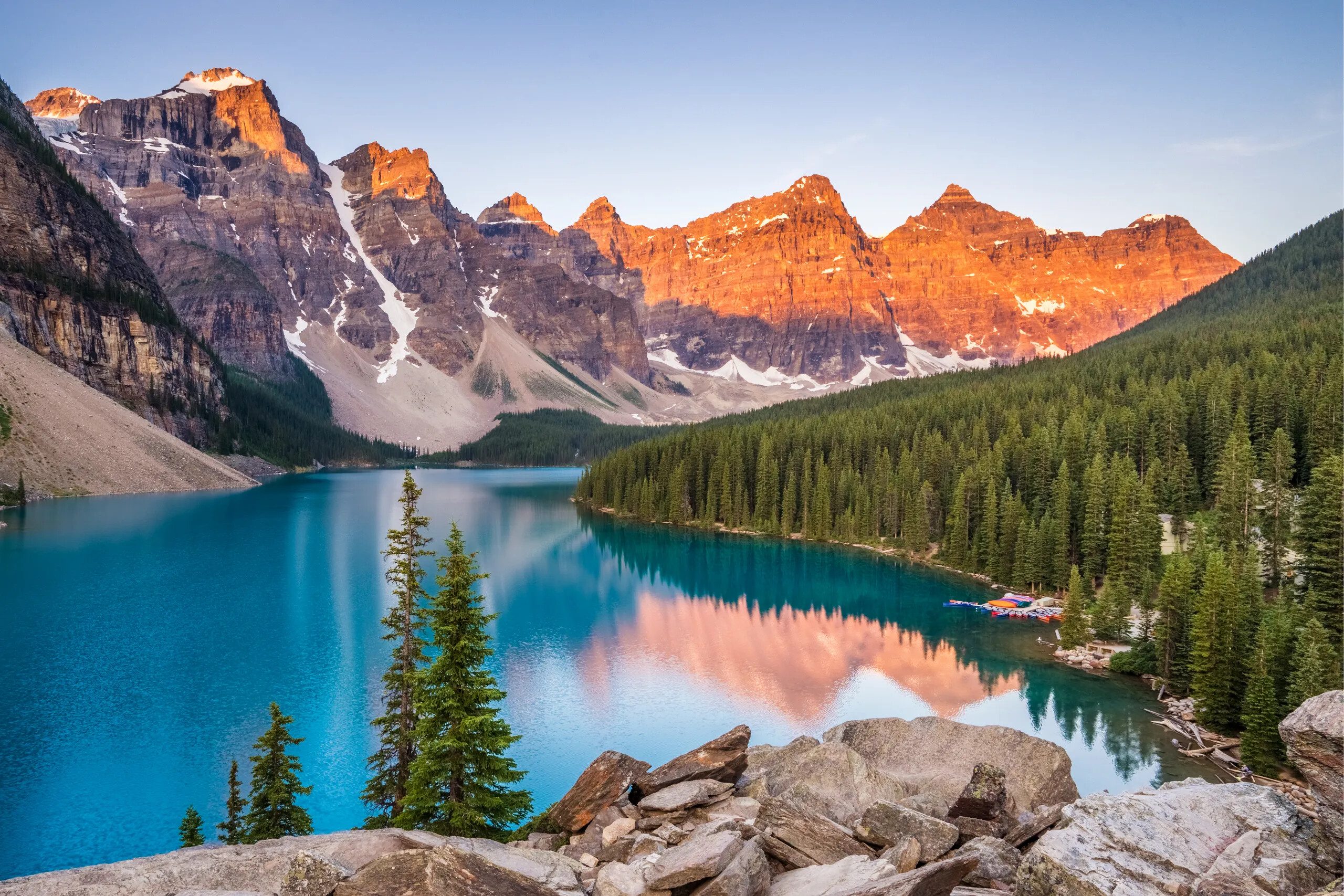
Canadian travel is having its biggest year in decades. A Leger poll found 48% of Canadians were already less likely to travel to the US in 2025, and that sentiment has only deepened into 2026. Cross-border trips dropped 25% last year. Domestic flight searches are up 12%. The dollars didn’t disappear. They just went somewhere better.
Whether you’re Canadian and finally ready to explore your own backyard, or an international traveler reconsidering a US trip, here are six destinations worth your attention right now.
1. Banff & the Canadian Rockies, Alberta
Best months to visit:
- June–September for hiking
- December–March for skiing
- May & October for fewer crowds and better rates
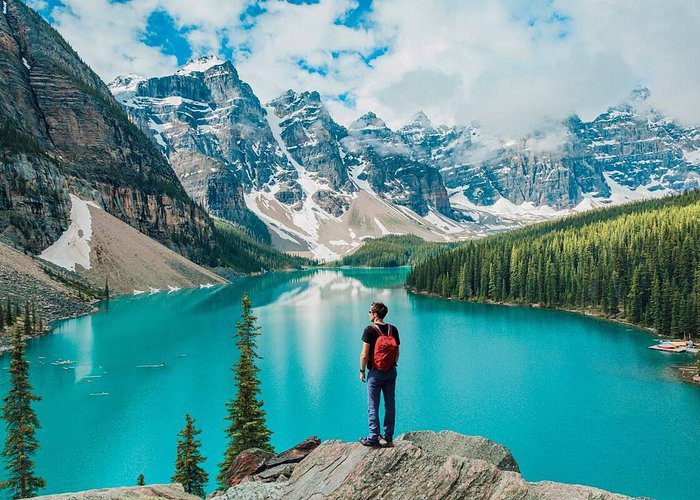
The water at Moraine Lake is a colour that doesn’t look real, and somehow looks even less real in person. Beyond the photos, Banff National Park is a legitimate four-season destination with some of the best hiking, skiing, and wildlife watching in North America.
What to know before you go:
- Hiking: The Plain of Six Glaciers above Lake Louise and the Sentinel Pass trail to Larch Valley are two of the best day hikes in Canada. The Icefields Parkway stretches 230 km between Banff and Jasper and is worth at least a full day, with stops at Peyto Lake and the Athabasca Glacier.
- Skiing: Sunshine Village and Lake Louise Ski Resort are two of the best mountains in North America, with longer seasons than most US resorts. Mt. Norquay is smaller and great for families.
- Getting around: You need a car. Banff town is walkable but the park is vast. Book the Moraine Lake shuttle through Parks Canada since private vehicles are restricted at peak season.
- Where to stay: Base yourself in Canmore, 20 minutes from the park gate. Quieter than Banff town, better value, and a genuine mountain community rather than a resort strip.
2. Tofino, British Columbia
Best months to visit:
- July–September for warm weather and flat-water paddling
- March–May for storm watching and off-peak rates
- Year-round for surfing
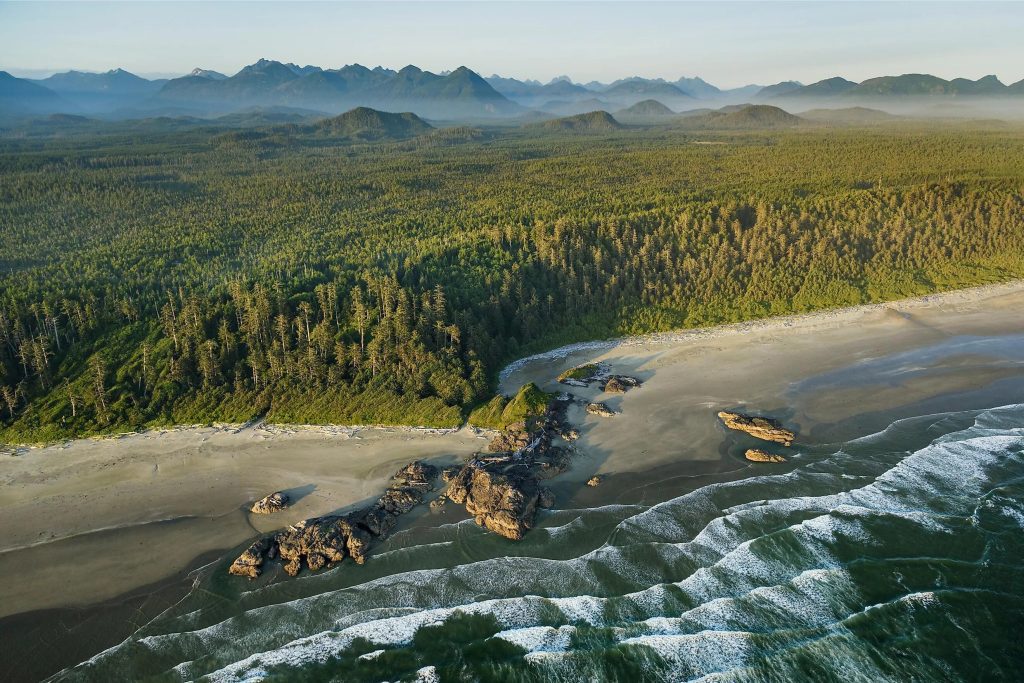
You smell the ocean before you see it. The road in winds through old-growth rainforest and then opens suddenly onto the Pacific. Tofino sits on the western edge of Vancouver Island inside Pacific Rim National Park Reserve, and it’s one of the few places in Canada that works as a destination in every season.
What to know before you go:
- Surfing: Cox Bay and Long Beach are the main breaks. Surf schools operate year-round for beginners. Tofino Surf School and Surf Sister are both well-regarded. Summer is mellow and good for learning; winter swells draw serious surfers from across North America.
- Wildlife: Whale watching runs March through October. Black bear and wolf tours operate in spring and fall. Pacific Rim National Park Reserve has some of the best old-growth forest walks on the continent, including the Rainforest Trail and Schooner Cove.
- Food: The seafood here is exceptional. Dungeness crab, wild salmon, halibut straight off the boat. Wolf in the Fog and Shelter Restaurant are the standouts. The fish market near the harbour is worth a stop every morning.
- Getting there: Fly into Nanaimo or Victoria and drive 3 to 4 hours, or fly directly into Tofino/Long Beach Airport (YAZ) from Vancouver. No direct flights from most major Canadian cities, so plan accordingly.
- Where to stay: Cedar cabins and oceanfront cottages are the right format here. Nearby Ucluelet landed on Expedia’s Destinations of the Year list for 2026, a quieter and less-visited alternative worth considering if Tofino feels too busy in peak summer.
3. Prince Edward County, Ontario
Best months to visit:
- June–October for wine and beaches
- September–October for harvest season
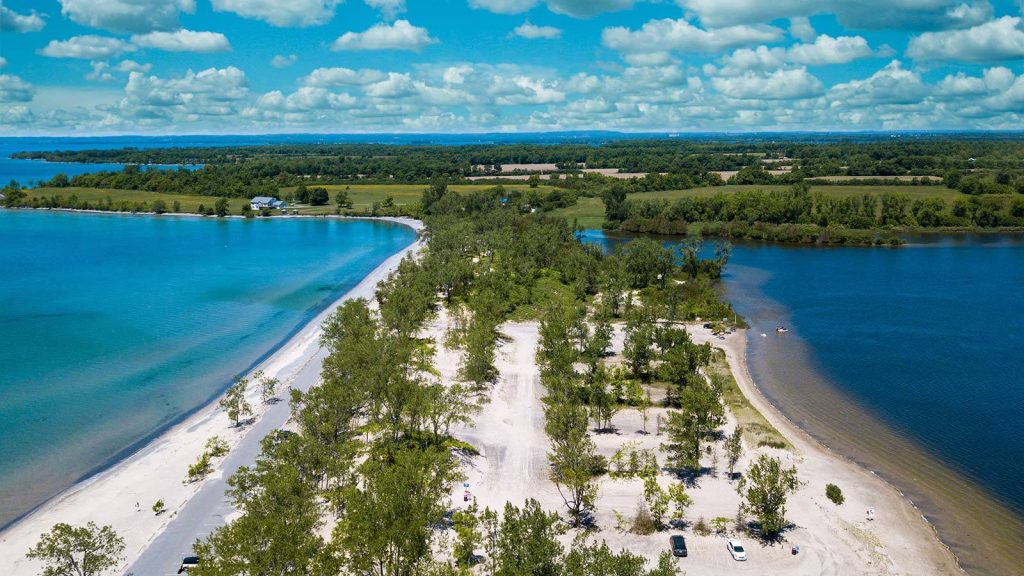
Two hours east of Toronto, Prince Edward County sits on a limestone peninsula in Lake Ontario.
It’s the same geology that gives its wines their mineral character, and it’s Ontario’s most talked-about short-trip destination for good reason: world-class wineries, the largest freshwater sand dunes in the world, serious food, and a pace of life that makes the drive back to the city feel like the wrong direction.
What to know before you go:
- Wine: The County has over 40 wineries. Norman Hardie, Huff Estates, and Trail Estate are the most acclaimed. The Closson Chase and Grange of Prince Edward are worth the detour. Most wineries are open for tastings without a reservation from June through October.
- Beaches: Sandbanks Provincial Park is the main draw, with massive freshwater dunes and warm, shallow water. It gets busy in July and August, so arrive early or go on a weekday. North Beach is a quieter alternative inside the same park.
- Food: The farm-to-table scene here is serious. Fyn Restaurant and The Hubb in Picton are local favourites. The Saturday farmers’ market in Picton runs through the season.
- Getting there: Drive from Toronto (2 hours) or Kingston (45 minutes). No train or bus service, so a car is essential.
4. Niagara-on-the-Lake, Ontario
Best months to visit:
- May–October for wine touring and the Shaw Festival
- December for the Niagara Parkway Christmas lights
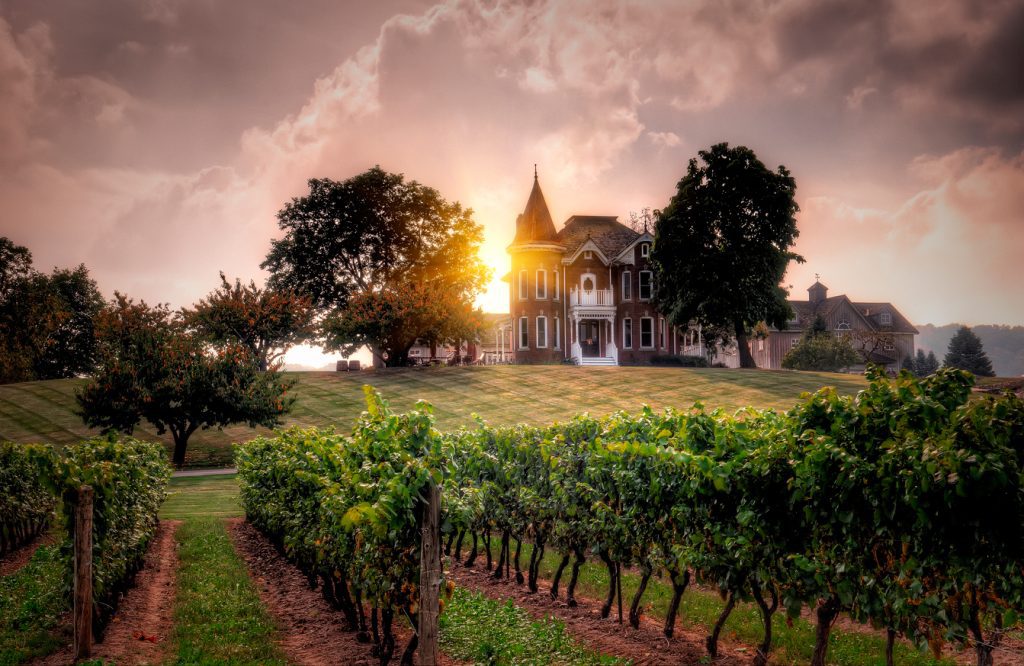
Most people see the Falls and leave. The ones who drive 20 minutes north to Niagara-on-the-Lake tend to stay for the weekend. It’s one of Canada’s best-preserved 19th-century towns and one of its best wine regions, sitting at the mouth of the Niagara River on Lake Ontario.
What to know before you go:
- Wine: The Niagara Peninsula has over 100 wineries and is best known for its Rieslings, Chardonnay, and ice wine. Inniskillin, Peller Estates, and Ravine Vineyard Estate are among the most visited. The wine route is easily done by bike or with a designated driver, and several tour operators run half and full-day tastings from the town.
- The Shaw Festival: One of North America’s largest theatre festivals, running April through October across four stages. Book tickets in advance at shawfest.com since summer weekends sell out.
- The town: Old Town Niagara-on-the-Lake is genuinely walkable with boutique shops, good restaurants, and a waterfront park along the lake. It’s not a big destination; the charm is in the quietness of it.
- Getting there: 90 minutes from Toronto, 20 minutes from Niagara Falls. Easy day trip from Buffalo or Hamilton.
5. Kelowna & the Okanagan, British Columbia
Best months to visit:
- July–September for lake and wine season
- September–October for harvest
- December–March for skiing
In the morning the vineyards are still in mist and the lake is flat. By noon you’re on a patio with a cold glass of Rosé, looking out at water that stretches to the mountains.
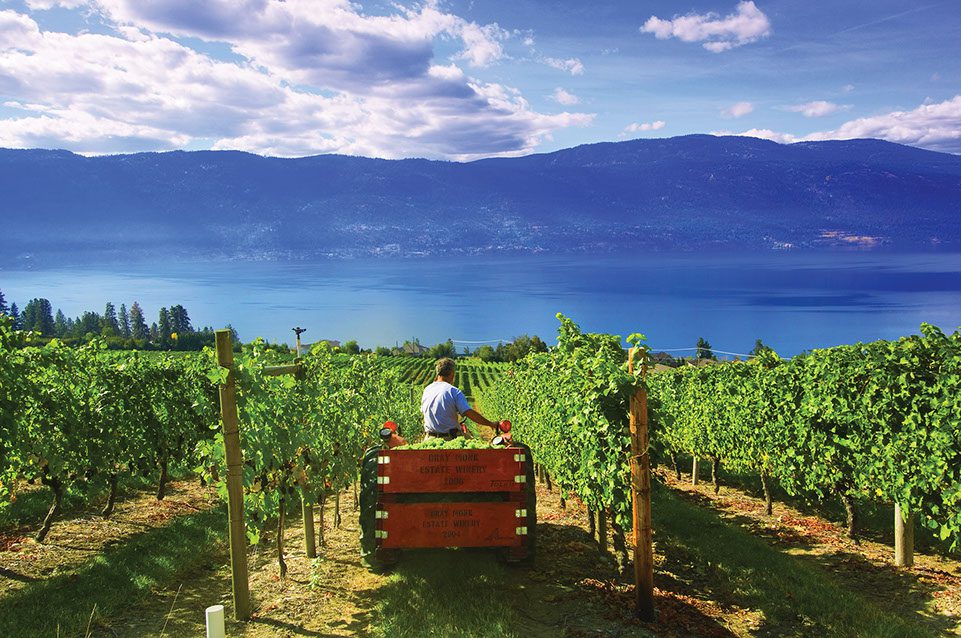
The Okanagan Valley is Canada’s premier wine region. Unlike Napa, it comes with a 135-kilometre lake warm enough to swim in, world-class skiing 45 minutes away, and prices that still make sense.
What to know before you go:
- Wine: The Okanagan has over 200 wineries across sub-regions stretching from Vernon in the north to Osoyoos in the south. Mission Hill Family Estate, Burrowing Owl, and Quails’ Gate are the marquee names. The South Okanagan around Oliver and Osoyoos is the hottest sub-region right now, warmer and drier, and producing some of the most interesting reds in the country.
- The lake: Okanagan Lake is warm enough to swim from late June through September. Kelowna’s City Park beach is the most central; Gyro Beach is a local favourite. Paddleboard and kayak rentals are available across the city.
- Skiing: Big White Ski Resort, 45 minutes from Kelowna, gets some of the driest powder in BC and is significantly less crowded than Whistler. Silver Star Mountain Resort near Vernon is another strong option for families.
- Getting there: Fly into Kelowna International Airport (YLW) direct from Vancouver, Calgary, Toronto, and most major Canadian cities. A car is useful but the wine trail between Kelowna and Penticton is manageable with tour pickups.
6. Nova Scotia
Best months to visit:
- June–September for road tripping and whale watching
- September–October for the Cabot Trail in fall colour
- Winter for atmosphere without the crowds
The Cabot Trail does something to people. You drive the coastal cliffs of Cape Breton with the Atlantic dropping away below you and somewhere around the second hour you stop checking your phone.
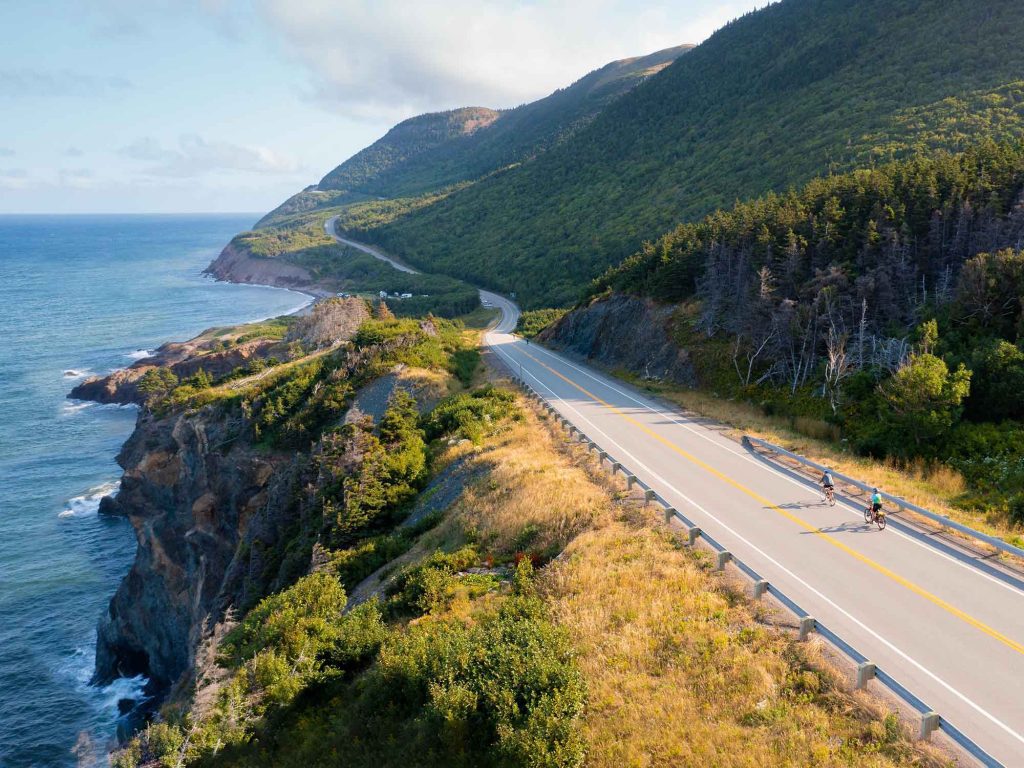
Nova Scotia is Canada’s most underrated road trip, and in 2026 Flight Centre Canada named Atlantic Canada one of its top recommended alternatives for travelers moving away from US trips.
What to know before you go:
- The Cabot Trail: 298 km of coastal cliffs, highland plateau, and Cape Breton Highlands National Park. Allow at least two full days, three if you want to stop properly. Ingonish Beach and the Keltic Lodge are good midway points. Drive it counterclockwise for the best views.
- Whale watching: The Bay of Fundy has some of the best whale watching in the world, running June through October. Digby Neck and Brier Island are the prime departure points. The Bay of Fundy also has the highest tides on earth and the tidal bore at Hopewell Rocks in New Brunswick is worth the detour if you’re road tripping.
- Food: Lobster in Lunenburg, scallops in Digby, chowder everywhere. The Acadian food culture in the western part of the province is distinct and worth exploring. Halifax has a serious restaurant scene centred around Agricola Street and the North End.
- Halifax: Nova Scotia’s capital is walkable, genuinely fun, and easy to underestimate. The Historic Properties waterfront, Citadel Hill fortress, and the Seaport Farmers’ Market are all worth time. It works well as a base for day trips in either direction.
- Getting there: Fly into Halifax Stanfield International Airport (YHZ) direct from most major Canadian cities and several US airports. A car is essential for anything beyond Halifax itself.
Book direct. Keep the fees where they belong — in your pocket.
Airbnb charges hosts 15% in platform fees for every booking. These fees end up transferred tot he traveler through an inflated nightly fee. On a one-week rental, that’s hundreds of dollars gone before you’ve arrived.
Stay was built to fix that. No service fees for travelers. Hosts pay a flat annual rate and keep 100% of what you pay, which means better-priced properties and hosts who are genuinely invested in your trip.
Banff, Tofino, and the Okanagan are already filling up for July and August 2026. If you have dates in mind, now is the time.